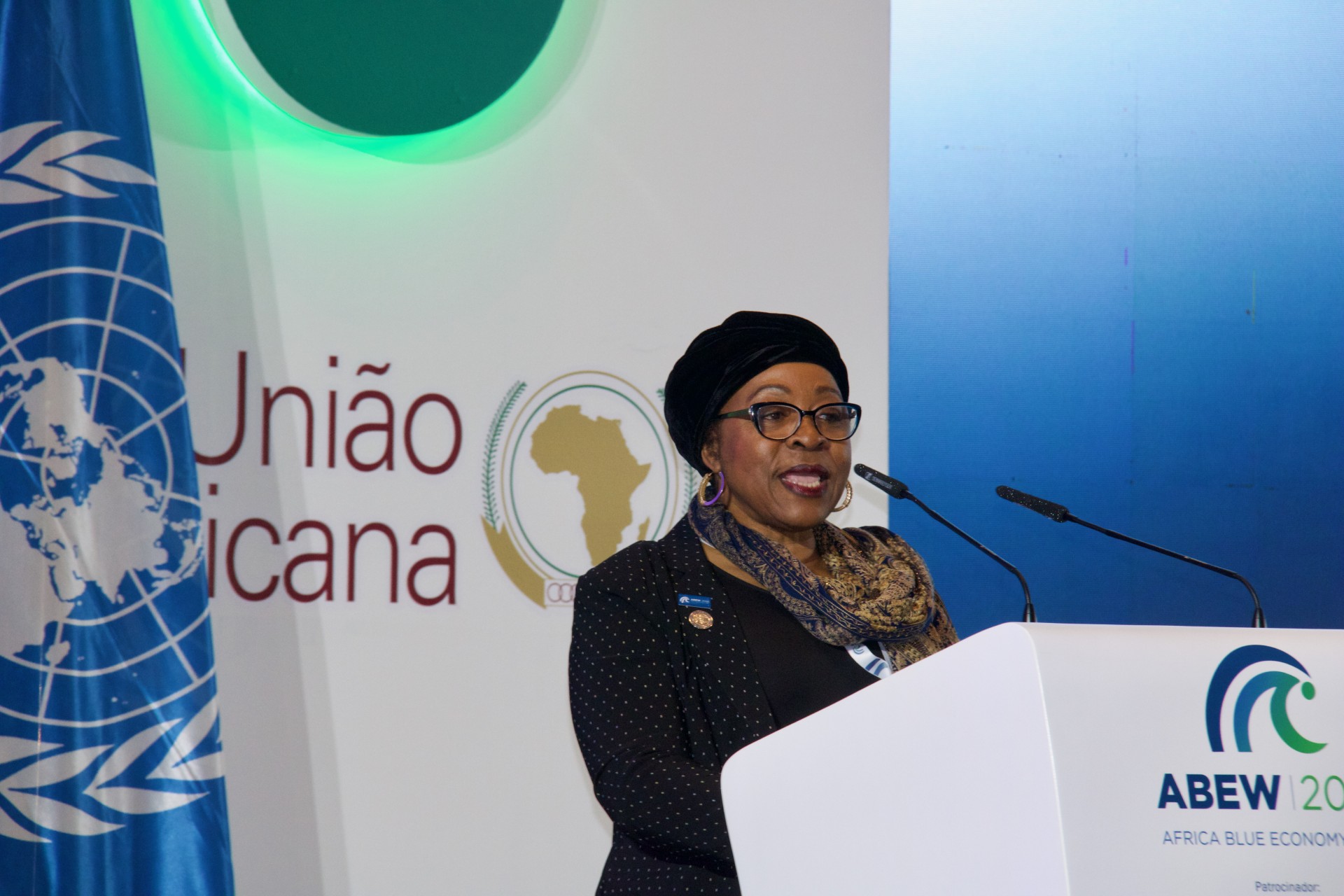
Africa showcased its commitment to harnessing the potential of its oceans, rivers, and coastlines at the 3rd Africa Blue Economy Week (ABEW) held on 22-25 July 2026 in Luanda, Angola.
Held under the theme “From Strategy to Action: Political Leadership for Africa’s Blue Economy Transformation”, the event brought together leaders, experts, and development partners from across the African continent and beyond to chart a strategic course toward sustainable development and economic diversification through the blue economy.
Addressing delegates at the official opening of the Ministerial High-Level Segment, Her Excellency Esperança Maria Eduardo Francisco da Costa, Vice President of the Republic of Angola, commended the African Union for selecting Angola as the host country. She called on Member States and Regional Economic Communities to adopt the Luanda Declaration with consensus, embodying the spirit of pan-African solidarity to transform the blue economy in line with AU Agenda 2063, ‘The Africa We Want’.
She highlighted the relevance of the theme and called for accelerated implementation of the commitment and frameworks.
In her address, Deputy Executive Secretary for Regional Integration at the Southern African Development Community (SADC), Ms. Angele Makombo N’tumba, emphasised the strategic importance of Africa’s marine and inland waterways. She highlighted that over 3.3 million people within SADC region depend directly on aquatic resources for their livelihoods and food security.
“Today, we recognize the blue economy as a vital engine for sustainable growth, regional integration, and resilience,” Ms. N’tumba stated and added that, “Our collective efforts, guided by regional strategies and international frameworks, are paving the way for a prosperous and sustainable future for Africa’s oceans and waterways.”
The event culminated in the endorsement of the Luanda Declaration and Call to Action, which articulate shared priorities and commitments to accelerate the implementation of Africa’s blue economy agenda.
Key initiatives discussed included continued support from the African Development Bank (AfDB) for the Multinational Programme for Improving Fisheries Governance and Blue Economy Trade Corridors (PROFISHBLUE). This initiative aims to promote sustainable fisheries management and intra-regional trade. Additionally, the establishment of the SADC Monitoring, Control, and Surveillance Coordination Centre (MCSCC) in Mozambique was highlighted as a milestone in combating illegal fishing activities that threaten marine biodiversity and regional economies.
Regional and international partners, including ambassadors from the European Union and Norway, underscored the importance of strengthened cooperation, innovative financing solutions, and evidence-based policymaking to unlock the full potential of Africa’s blue economy.
As Africa continues to invest in sustainable ocean-based industries, the continent is positioning itself as a global leader in the blue economy—unlocking new opportunities for economic growth, climate resilience, and shared prosperity.


